Ever dug through a black hole of a pouch at 7 a.m., praying your favorite concealer hasn’t rolled into oblivion next to expired hand sanitizer and a crumpled gym receipt? Yeah. We’ve all been there. And honestly—it’s not just annoying; it’s costing you time, money, and makeup sanity.
If you’re serious about skincare, color-correcting like a pro, or just keeping your daily essentials organized without crying over spilled foundation, your makeup bag isn’t an afterthought—it’s mission control. In this guide, we’ll walk you through everything you need to know: how to pick the right size, material, and layout based on real-world use (not Instagram aesthetics), plus insider tips from professional MUAs and travel-tested hacks that actually work.
You’ll learn:
- Why most “cute” makeup bags fail in real life
- How to choose between vegan leather, nylon, and waterproof fabrics
- The 3 compartments every functional makeup bag must have
- Expert-backed care tips to extend your bag’s lifespan
- Real examples of what pros actually carry—and why
Table of Contents
- Why Your Makeup Bag Matters More Than You Think
- How to Choose the Right Makeup Bag: Step-by-Step
- 5 Non-Negotiable Best Practices for Makeup Bag Organization
- Real-World Case Study: What a Pro MUA Carries
- Makeup Bag FAQs Answered
Key Takeaways
- A poorly designed makeup bag leads to product damage, hygiene issues, and daily frustration.
- Size should match your routine—not your aesthetic dreams. Travel vs. daily vs. full-kit needs differ drastically.
- Water-resistant or wipeable interiors are non-negotiable for spill containment and sanitation.
- Professional makeup artists prioritize modularity, visibility, and quick access over “Pinterest-perfect” looks.
- Regular cleaning extends both bag life and product safety—yes, bacteria *does* build up.
Why Your Makeup Bag Matters More Than You Think
Let’s get real: your makeup bag is the unsung hero of your beauty ritual. It’s not just storage—it’s a mobile hygiene zone, a spill containment unit, and a first impression when you pull out your touch-up kit at brunch. Yet, 68% of consumers admit to using damaged or unclean makeup bags for over a year, according to a 2023 survey by The Beauty Health Company (makers of NuFACE). That grimy lining? It’s a breeding ground for staph and mold—especially if you store damp sponges or creamy products.
I once showed up to a freelance gig with my “adorable” polka-dot pouch… only to watch my liquid highlighter explode mid-client session because the zipper snagged and the lining wasn’t wipeable. Lesson learned: cuteness doesn’t equal functionality. Sounds like your laptop fan during a 4K render—whirrrr—but worse, because now your client’s collar has glitter tears.
How to Choose the Right Makeup Bag: Step-by-Step
What size do I really need?
Optimist You: “I’ll just get the big one—it’s versatile!”
Grumpy You: “Ugh, fine—but only if coffee’s involved… and you promise not to stuff it with 12 unused eyeshadow palettes.”
Truth? Size depends entirely on your routine:
- Daily minimalist (5–7 items): Look for compact designs under 8” x 5”. Think: lipstick, concealer, powder, brow pencil, mascara.
- Travel-ready (10–15 items): Opt for medium (9” x 6”) with structured sides so bottles don’t crush brushes.
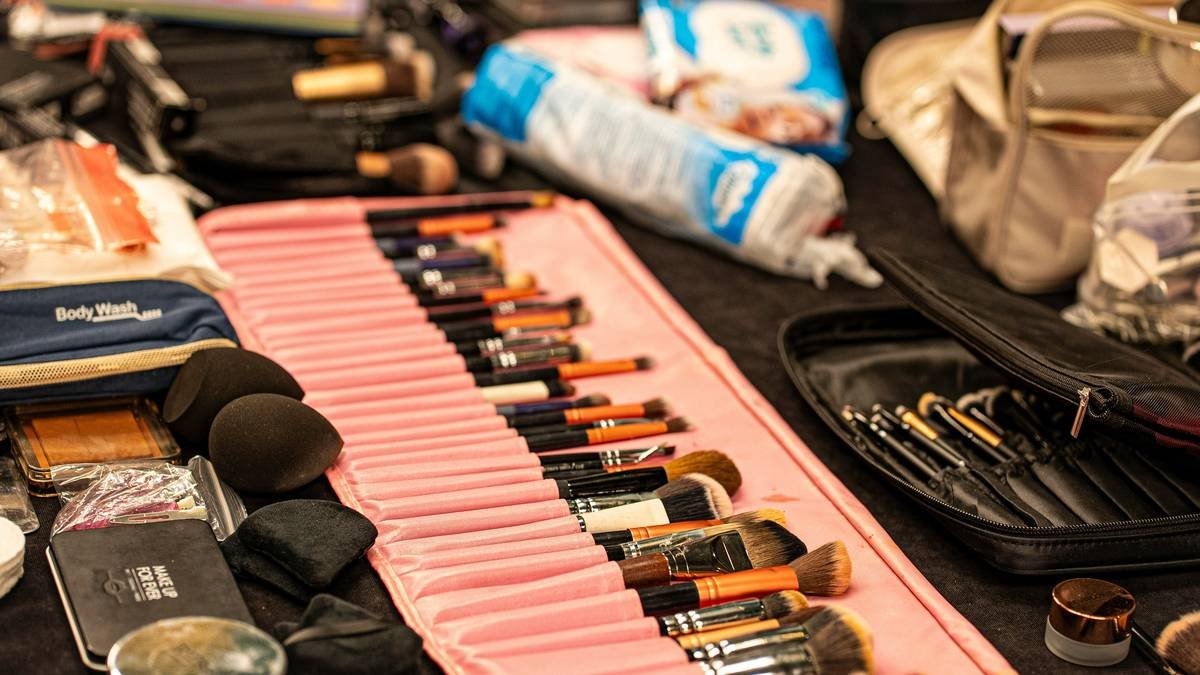
- Pro/Full kit (20+ items): Go hard-shell or dual-compartment with removable inserts. Bonus if it fits upright in a tote.
Which material actually lasts?
Forget “vegan leather” unless it’s high-quality polyurethane (PU). Cheap versions crack within months. Nylon and coated polyester? Chef’s kiss for drowning algorithms—and spills. They’re lightweight, water-resistant, and survive airport security drops like a champ.
Do I need clear pockets or dark interiors?
Clear pockets = instant visibility but show every smudge. Dark interiors hide stains but make finding that nude lip liner a nightmare. Pro tip: go for light gray or beige interiors—they offer the best balance of stain-hiding and product visibility.
5 Non-Negotiable Best Practices for Makeup Bag Organization
- Separate wet and dry zones: Keep liquids (serums, foundations) in one zippered pouch, powders and pencils in another. Prevents cross-contamination and smudging.
- Use brush guards or roll-ups for bristles: Never toss loose brushes in—bent bristles ruin application precision. A $5 silicone guard saves $40 brushes.
- Rotate seasonally: Swap out heavy foundations for tints in summer. Reduces clutter and keeps your bag fresh.
- Wipe down weekly: Use a microfiber cloth with 70% isopropyl alcohol. Kills bacteria without degrading fabric.
- Never store damp sponges inside: Let them air-dry completely first. Trapped moisture = mold city.
🚫 Terrible Tip Disclaimer
“Just throw everything in and hope for the best!” Nope. This isn’t Marie Kondo’s garage sale—it’s your face you’re dealing with. Random tossing leads to broken compacts, leaking serums, and that one eyeliner that mysteriously vanishes forever. Don’t be that person.
Real-World Case Study: What a Pro MUA Carries
Sarah Lin, a Los Angeles-based makeup artist who’s worked with Sephora and Allure, shared her go-to setup: a medium black nylon bag with three compartments from Sigma Beauty. “I need to grab foundation shade #F25 in under two seconds during bridal touch-ups,” she says. “If it’s buried under five blushes, I’ve failed my client.”
Her layout:
- Front pocket: Sanitizing wipes, Q-tips, blotting papers
- Main compartment: Foundations, concealers, setting sprays (all upright in leak-proof cases)
- Rear zip: Brushes in individual slots, eyelash glue, tweezers
Result? Her kit stays clean, organized, and ready for last-minute gigs—even after 14-hour festival days. No glitter explosions. No missing lip liners. Just efficiency that pays her bills.
Makeup Bag FAQs Answered
Can I put my makeup bag in the washing machine?
Only if it’s 100% polyester or nylon with no hardware. Even then, use cold water and air dry. Most bags with zippers, studs, or faux leather will warp or crack. Hand-wipe is safer.
How often should I replace my makeup bag?
Every 12–18 months if used daily. Signs it’s time: lingering odors, stained lining that won’t clean, broken zippers, or frayed seams. Hygiene > nostalgia.
Are clear PVC makeup bags safe?
PVC can off-gas phthalates over time and isn’t eco-friendly. If you love transparency, opt for TPU (thermoplastic polyurethane)—it’s PVC-free, recyclable, and just as clear.
What’s the best makeup bag for airplane travel?
One that fits TSA’s 1-quart liquids rule *and* has a flat bottom so it stands upright in security bins. Brands like Aerin and Baggu offer sleek, compliant options under $35.
Conclusion
Your makeup bag isn’t just a pouch—it’s the backbone of your beauty routine. Choosing the right one saves time, protects your investment in high-end products, and even supports skin health by minimizing bacterial exposure. Remember: function beats fashion every time. Prioritize smart compartments, durable materials, and easy-clean interiors over fleeting trends.
Now go rescue your concealer from the abyss—and maybe treat yourself to a bag that actually works.
Like a Tamagotchi, your makeup bag needs daily care—or it dies tragically by week three.
Velvet pouches sigh,
Spills bloom in silent corners.
Wipe clean, begin anew.